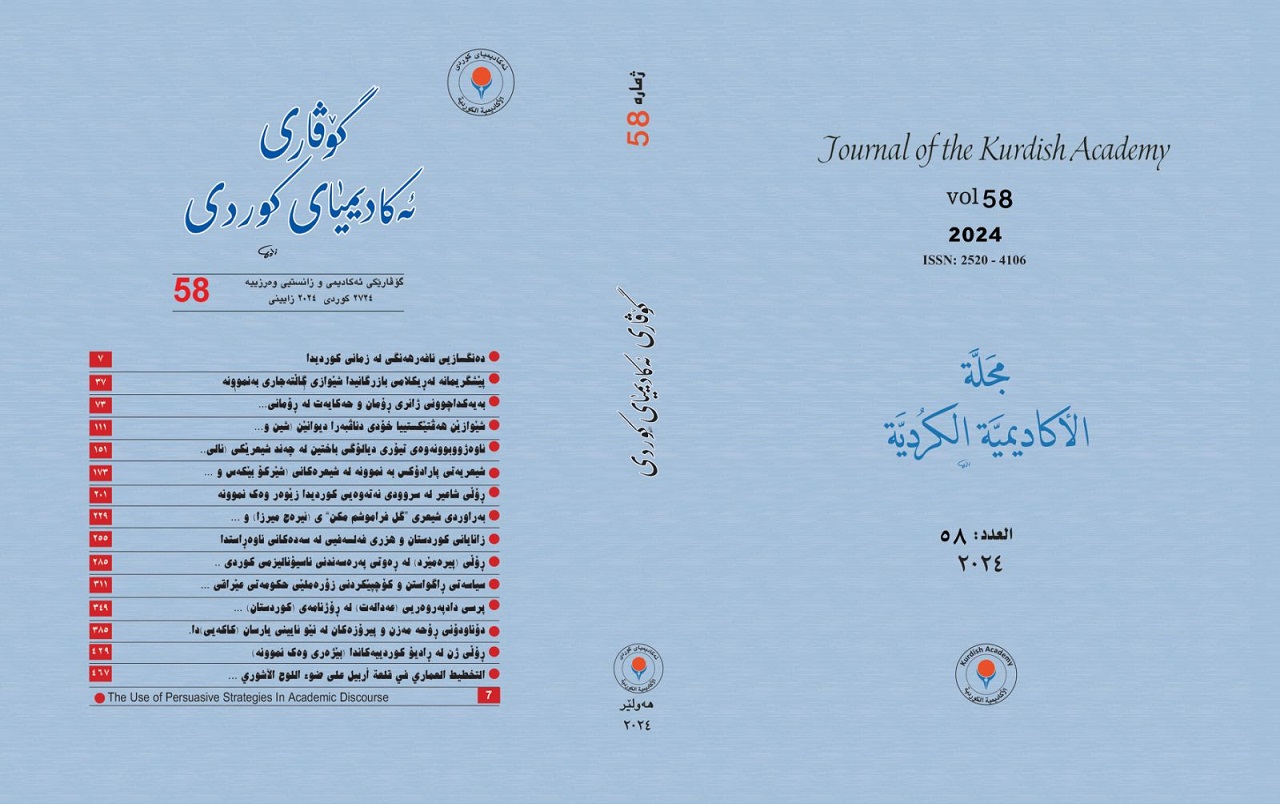
Journal Kurdish Academy

Journal of the Kurdish Academy

Vol. 0, No. 58 (2024)

Journal of the Kurdish Academy

28 March 2024 · 16 articles

Proceedings of
Advanced Knowledge

metempsychosis of the great and holy spirits in the yarsan religion

زریان جیزنی محەمەد,

Summary

This research is about the great holy spirits in the Yarsan religion and their recognition through their words and sacred texts (conclusion) Yarsan religion and philosophy of recognition.

Recognition is one of the basic pillars of the Yarsan religion (the transfer of souls from one body to another).
The ancient Eastern religions were based on Recognition. For example Mithras, Zoroastrianism, Zarvani, Buddhism, etc.

According to the philosophy of the Yarsan religion, the great spirits are sacred to them and even if they belong to another religion, they still consider them sacred and sovereign, even if this spirit is in another era and outside He also played a role in the Yarsan religion . . . .

In this study, under the light of the philosophy of Recognition, we have taken examples of several (dons) and great spirits and compared them with the holy being of the great spirits and saints in the Yarsan religion.

Keywords: (Dona Don, Great Spirits, Yarsan Religion, Leader, Period)

Proceedings of
Advanced Knowledge

The issue of justice in the newspaper "Kurdistan" April 21 1898

مەغدید خدر ئەحمەد سەپان,

The publication of the first Kurdish newspaper, "Kurdistan" on April 21, 1898, in Cairo, opened a great and necessary door for the Kurdish people to continue their legitimate struggle and prepare them for peaceful struggle towards independence.

The publication of the first Kurdish newspaper by a Kurdish emir made this struggle easier because the reader received their messages and advice from their leader. In the first Kurdish newspaper, all the articles were written for the first time in the history of Kurdish journalism. In fact, there was no recipe for Miqdad Madhat Badrkhan and his brother Abdulrahman Beg to follow. Kurds understood that the sons of Madhat Beg in Egypt and Europe published a newspaper with a very rich and satisfying content, that every Kurd alive could be proud of.

Reading all the issues, you can see that the newspaper "Kurdistan" is at the door of all the subjects that are very important for Kurdish society not only then, but still very important and have not lost their relevance, including: history, politics, literature, social, international relations, Justice, education, etc. The sons of Bardkhan Beg were able to establish a very good, beautiful and solid foundation for Kurdish journalism. For the first time, a research on the topic of justice in the newspaper, which was previously a hidden side which Kurdish researchers did not write about, was presented in the pages of the "Kurdistan" newspaper.

The neglect of this important aspect created a huge gap in Kurdish journalism and the history and experiences of the past could not be used properly to learn from. In this study entitled: Justice in the Newspaper ’Kurdistan’, follows a detailed discussion of justice in Kurdish society of that time. Additionally, an analysis is carried out to gauge the frequency of the term "justice" and explore the underlying purpose behind its usage. The meaning and origin of justice in ancient Greek history and civilization was also briefly discussed.

Proceedings of
Advanced Knowledge

The Method of intertextuality Between Two Divans (Sheen, Shady, Delistan, Bahiz)

حەمدیە حەسەن محەمەد,

This study, entitled is an attempt to show that intertextuality is not only tackle the interaction and relationship between two texts or a text and a group of texts, whether these texts are prior or contemporary texts. But, it also tackles the interaction, connection and relationship among the texts and works of the same writer. Generally, intertextuality is divided into three types: self-intertextuality: in this type of intertextuality, interaction, overlap, and quotation occur between the texts of one writer. Internal: in this type of intertextuality, interaction and relationships is between two texts of the same period of time. External: this type of intertextuality is the reaction, interference, and bonding between a text and a large group of other texts. The purpose of this study is to show the most important methods of self-intertextuality that are used in all the three divans that are selected as a sample for research. The results showed that this type of intertextuality has been used in all the three divans by quoting words, expressions, ides, and meanings. This is due to the poets’ desire to raise and show their experiences of their previous texts in their new texts, because it has a big and significant role in their journey of creativity and productions. Self-intertextuality of the texts of the same writes also becomes a principle for identifying and determining the characteristics of the style of writing of each writer or poet, and also to distinguish between different styles of different writers and poets.

Keywords: method, intertextuality, text, self, interaction, relationship, quotation, divan.

Proceedings of
Advanced Knowledge

The role of the poet in the Kurdish national anthem Zewar as an example

ئاری قادر محەمەد, هەیسەم شەعوبی ئیبراهیم, ڕزگار محەمەد شێخ محەمەد,

ئەم توێژینەوەیە لەسەر ڕێبازی مێژوویی و وەسفی ئەنجام دراوە، بەشێوەیەکی زانستی ناوەڕۆکی ئەم توێژینەوەیە لەچەند بابەتێک پێکهاتووە: بابەتی یەکەم تایبەتە بە سەرەتای دروستبوونی سروودی نەتەوایەتی و ئەو هۆکارە ڕامیيارانەی کە ڕۆڵی هەبووە لەو بوارەدا. بابەتی دووەم بریتییە لە مێژووی هۆنراوەی نەتەوایەتی لەکوردستان و ڕۆڵی شاعیر لە چاندنی تۆوی بیری نەتەوایەتی و خۆشویستنی خاک ونیشتمانی کوردان. بابەتی سێیەم بریتییە لە ڕۆڵی زێوەری شاعیر وەک پێشەنگێک لە ناساندن و بڵاوبوونەوەی ئەو سروودانە. ئەمەش ئەگەڕێتەوە بۆ ئەوەی کە شاعیر لە سروودی نەتەوایەتیدا گرنگترین ڕۆڵ و کاریگەریی بەرچاوی هەبووە، لە چاندنی تۆوی خۆشویستن و دڵسۆزی و بەرگری کردن لەخاک و نیشتمان. ئامانجی ئەم توێژینەوەیە تیشک خستنە سەر ئەو ڕۆڵەیە کە شاعیر بینیویەتی لە سەرەتای دروستبوون و فێرکردن و بڵاوبوونەوەی سروودی نەتەوایەتیی لەناو گەنج ولاوان و کۆمەڵەگەی کوردەواریدا.

Proceedings of
Advanced Knowledge

The Use of Persuasive Strategies In Academic Discourse

Kurdistan Rafiq Moheddin (koyi), Roberta Youel Jajo,

As the key component of success and achievement, persuasive strategies are used in academic discourse. The purpose of this paper is to investigate how persuasive strategies are employed in academic discourse for achieving development and success. In this research, a mixed-method is used to collect data, and the researcher adopted Connor and Lauer's (1985) theory to analyze the data. The data of this paper consists of three public academic speeches, delivered on the same occasion 'Graduation Ceremony' by the rectors of three top universities; Dr Muslih Mustafa previous president of Soran University, Dr Bruce W. Ferguson president of American University of Sulaimani and Dr Dawood Sulaiman Atrushi president of Duhok University, in Kurdistan Region, ranked as first, second and third, according to UniRank (2021). Despite facing some challenges, the findings of this study demonstrated that the three rectors have a positive attitude towards the use of persuasive strategies. That is, they employed persuasive strategies, but they treated them differently in their speeches, as significant tools for encouraging their university staff to do more research with high quality and having considerable citations which in turn resulted in having topped the identified universities via meeting the UniRank selection criteria during the academic year of 2020-2021.

Proceedings of
Advanced Knowledge

ئاوه‌ژووبوونه‌وه‌ى تيۆرى دیالۆگى باختين له‌ چه‌ند شيعرێكی(نالی و سالم و كوردی)دا

ئومێد عزيز مسته‌فا

This research is partly in the fact that dialogue is one of the most important arts of language and speech in general It has been used in literature in particular. The art of dialogue has been widely used in many fields of language and literature because of its importance as a major part of the time It is viewed in order to convey the main ideas in the text. The main purpose is to explain Bakhtin's views on the art of dialogue in Kurdish poetry. Especially in classical Kurdish poetry. While Bakhtin generally deprived poetry of the art of dialogue and believed that poetry is empty of dialogue, especially when he distinguishes between poetry and broadcasting and believes that the novel is the best example of dialogue, but the types of poetry are not for this purpose, along with examples of several lines of poetry by old and new poets Kurdish for Types of Dialogue in poetry, several lines of poetry by Nali, salim and Kurdi have been made the essence of our research to prove the art of dialogue in poetry. Keywords: poetry, discussion, Nali, Salim and Kurdi.     

Proceedings of
Advanced Knowledge

التخطيط العماري في قلعة أربيل على ضوء اللوح الآشوري المحفوظ في متحف اللوفر

كاروان صديق بلباس,

ان البحث الموسوم (التخطيط العماري في قلعة أربيل على ضوء اللوح الآشوري المحفوظ في متحف اللوفر) يساهم في دراسة وتحقيق موضوع عمارة مدينة أربيل في ضوء الحجر الرخامي المنحوت بمشاهد إطلالة قلعة أربيل، المحفوظ حاليا في متحف اللوفر في باريس تحت الرقم (AO-19914). تثبت الكتابات المسمارية الآشورية أن أربيل اسمها القديم (أربا-ئيل)، تعد احدى المدن الآشورية المحصنة خلال حكم الدولة الآشورية الحديثة (911-612 قبل الميلاد)، إلى جانب عواصم آشورية أخرى مثل (آشور ونينوى وخرساباد وكالخو)، نظرا لموقعها المهم بين المناطق الوسطى والمناطق المحيطة بحدود الدولة الآشورية، فهي تعدَ بمثابة احدى المراكز الدولة الآشورية.

لعبت الكثافة السكانية والنشاط الاقتصادي وتأثير البيئة الطبيعية والمكون الجغرافي لمدينة أربيل دورًا فاعلًا في الحياة الآشورية. لطالما اعتبر الآشوريون أربيل على أنها مقاطعتهم الرئيسية وكان لهم حاكم خاص يزود الجيش الآشوري بالمؤن في المجال العسكري ويسلحهم خلال الحملات الحربية. لذلك لعبت إلى جانب مدينتي آشور ونينوى، دورًا دينيًا مهمًا كمركز عبادة للإلهة عشتار وأداء العديد من الطقوس لها، لأنها كانت المدينة مركزاً للفؤول وللأرصاد الفلكي لملوك الدولة الآشورية.

Proceedings of
Advanced Knowledge

بەراوردى شیعرى "گل فراموشم مکن" ى (ئیرەج میرزا) و "لەبیرم مەکە"ى (هێمن موکریانى) لەژێر ڕۆشنایی قوتابخانەى بەراوردى ئەمریکى

كانیاو قادر عەلی, سافیە محەمەد ئەحمەد, ,

ئەدەب بەرهەمى نەستە و ئەو زمانەى پێى دەنووسرێت خاوەن سیما و تایبەتمەندى خۆیەتى؛ بۆیە ئەدگارێکى جیاکارى هەیە لەگەڵ هەموو جۆرە دەربڕین و نووسێنێکى تر، هەر ئەمەش بۆتە هۆکارى  لەیەک نزیکى و هاوبەشبوونى ئەدەبى جیهانى لە چەندان خەسڵەت و بونیاتە هاوبەشەکانى هەر ژانرێک لە ژانرەکان.

شیعریش وەک بەشێک لە ئەدەب، چ لەڕووى ڕوخسارەوە چ ناوەڕۆکەوە، لەم لایەنە بەدەر نییە و لە پاڵ ئەمەشدا بە پێى شێوازى شاعیرەکە و ئەو قۆناغەى ئەدەبییەى تێیدا هاتۆتە بەرهەم هەڵگرى تایبەتمەندى و ناسنامەیەکى دیارکراوى خۆیەتى. هاوبەشی و لێکنزیکى دوو دەقى ئەدەبى شتێکى ئاسایی و  هەبووە، چ بە شێوەى ڕاستەوخۆ لە ئەنجامى کاریگەربوونى نووسەر و شاعیرێک بێت بە نووسەر و شاعیرێکى تر، چ بە شێوەیەکى ناڕاستەوخۆبێت و لە ئەنجامى هاوبەشبوونى ئایین و کەلتوور و ڕۆشنبیرى هاوبەش بێت، کە هەندێک جار نووسەرەکان بەو هۆکارانە کارتێکراو دەبن و هەمان تێڕوانینیان بۆ دیاردە و جیهانە دەوروبەر بۆ دروست دەبێت، لە ئەنجامدا دەقى لەیەکچوو بەرهەم دێن؛ بۆیە  لەو سۆنگەیەوە ئەو توێژینەوەیە لە ژێر ناونیشانى(بەراوردى شیعرى " گل فراموشم مکن " ى (ئیرەج میرزا) و " لەبیرم مەکە " ى (هێمن موکریانى) لە ژێر ڕۆشنایى قوتابخانەى ئەمریکى ئەنجامدراوە.

ئەم توێژینەوەیە بەراوردى ئەم دوو دەقە شیعرییەى کردووە لە چوارچێوەى پرەنسیپ و تایبەتمەندییەکانى ئەم قوتابخانە بەراوردییە و بە پێى پلانێکى زانستى  توێژینەوەکە، جگە لە پێشەکى، بەسەر دوو بەش دابەشکراوە. بەشى یەکەم، تایبەتە بە لایەنى تیۆرى و باسەکانى چەمک و زاراوەى ئەدەبی بەراورد، مێژووى سەرهەڵدانى ئەدەبی بەراورد، گرنگى بەراوردى ئەدەبى و تایبەتمەندییەکانى قوتابخانەى بەراوردى ئەمریکى باسیان لێوە کراوە. بەشى دووەمیش تەرخانکراوە بۆ لایەنى بەراوردکردنى هەردوو دەقەکە، تەوەرەیەکیان تایبەت کراوە بە لایەنە لێکچووەکانى هەردوو دەقەکە و تەوەرێکیشیان تایبەتکراوە بە لایەنە جیاوازەکانى هەردوو دەقەکە. لە کۆتایشدا ئەنجامەکانى توێژینەوەکە لە چەند خاڵێکدا خراونەتەڕوو لەگەڵ لیستى ئەو سەرچاوانەى سوودیان لێوەرگیراوە و پوختەى توێژینەوەکەش بە زمانى ئینگلیزى خراوەتەڕوو.

Proceedings of
Advanced Knowledge

بەیەكداچوونی ژانری ڕۆمان و حەكایەت لە ڕۆمانی(غەزەلنووس و باغەكانی خەیاڵ)ی بەختیار عەلی دا

حەیدەر جەوهەر ئەحمەد, پەخشان سابیر حەمەد,

ڕۆمان فۆرمێكی كراوەی هەیە و هەر ژانرێكی ئەدەبی دەتوانێ بە ئاسانی لە چوارچێوەی پێکهاتەکەیدا لە ئاستی ئاوێتەبوون یان لە ئاستی كۆكردنەوە دەربكەوێت، بەمەش ژانرە كۆن و نوێیەكان دەتوانن وزەیەكی زیاتر بە ئەزموونی ڕۆماننووس بدەن، له ‌ئه‌نجامدا بەیەكداچوونی ژانرە ئەدەبییەكان دواجار وەك ئامرازێكی هونەری لە ڕۆمانەكەدا بەرخوردی لەگەڵدا دەكرێت بۆ پێدانی ماناو دەلالەتی نوێ و دەربڕینی تێڕوانینە ئیستاتیكییەكانی ڕۆماننووس.

بەختیار عەلی یەكێكە لەو ڕۆماننووسە هاوچەرخانەی كورد كە لەم رۆمانەدا بەسەلیقەیەكی وردەوە ئەفراندنی خۆی خستۆتەڕوو و بایەخی بە بەیەكداچوونی ژانری ئەدەبی داوە. بۆیە لەم توێژینەوەیەدا كاركراوە بۆ ئەوەی بەیەكداچوونی حەكایەت و ڕۆمان لە تێكستی (غەزەلنووس و باغەكانی خەیاڵ) بخرێتەڕوو.

لە ناواخنی ئەم توێژینەوەیەدا ئاماژە بە ڕوونكردنەوەی بەیەكداچوونی حەكایەت بە ستراكتووری ڕۆمانەكە و مەبەست و مانا و ئاماژه‌کانی دراوە و ڕەهەندە جۆراوجۆرەكانی بەر ڕووناكی دراوە. 

  وشە سەرەكییەكان: بەیەكداچوونی ژانرەكان، پێكهاتەی ڕۆمان، حەكایەت، ژانرە كۆنەكان، ڕۆمانی كوردی. 

Proceedings of
Advanced Knowledge

پێشگريمانه‌ له‌ڕيكلامى بازرگانيدا- شێوازى گاڵته‌جارى به‌نموونه‌

شوكر محەمەد ساڵح, ئاسۆس ئەنوەر سلێمان,

Abstract

        This study which is entitled (Assumptions in Commercial Advertising - Humorous Style for Example) discusses the role of language in the preparation of television commercials. The language of commercial advertising should be attractive, short and simple to convince the people to buy the product. Therefore, the role of assumptions is discussed, how important it is for the preparation of advertising. The advertiser must have a good advertising skill of the other person's mind through assumptions to know his preferences and needs. Accordingly, the humorous style has been worked on, because in advertising it is important to influence the audience and change the direction of their thoughts, in order for them to enjoy it, and then be satisfied. This study consists of two parts, several results and a list of sources as follows:

        The first part deals with (assumptions in advertising), introducing assumptions and advertising, then advertising and its effects, advertising objectives, factors of effectiveness and persuasion in commercial advertising, methods of designing commercial advertising.

       The second part discusses the role of language in advertising in general and humorous advertising in particular, the role of language in commercial advertising, the linguistic principles of advertising, persuasion and persuasion steps, principles of persuasion in commercial advertising, humorous styles of advertising In business, humorous advertising presentations.

Keywords include: language, assumptions, commercial advertising ,humo persuasion.


Proceedings of
Advanced Knowledge

ده‌نگسازیی نافه‌رهه‌نگی لە زمانی كوردیدا

ڕێبین خالد خضر, عادل ڕەشید قادر, ,

ئەم توێژینەوەیە بە ناونیشانی (ده‌نگسازیی نافه‌رهه‌نگی لە زمانی كوردیدا) یه "ئەم توێژینەوەیە، لە تێزی دكتۆرای توێژەرەوە هەڵهێنجراوە" ، سنوری لێكۆڵینەوەكە لە چوارچێوەی دیالێكتی كرمانجی ناوەڕاست دایە، بۆیە نمونەی پێویست بەگوێرەی تەوەرەكانی بابەتەكە لە چوارچێوەی ئەم دیالێكتەدا، بەپێی ڕێبازی (سینكڕۆنی-شیكاری)شرۆڤەكراوە، ئامانج و گرینگی توێژینه‌وه‌كه‌ له‌وه‌دایه‌ ئه‌و دیارده‌ ڕێزمانییانه‌ لێكبداته‌وه‌، كه‌ گۆڕانی ده‌نگییان تێدا ڕووده‌دات، له‌ ئه‌نجامی ئه‌م توێژینه‌وه‌یه‌دا به‌و ئه‌نجامه‌ گه‌یشتین، ئەگەر گۆڕانی دەنگی گۆڕانی واتای بەدوادا نەیەت ، ئەوە دیاردەیەكی فۆنەتیكییە و دەچێتە چوارچێوەی دەنگسازیی نافەرهەنگییەوە لە سنوری فرەیز و ڕستەدایە ، ئه‌مه‌ش ڕێگا‌ی بۆ لێكدانه‌وه‌ی چه‌ندان دیارده‌ی ده‌نگی له‌ سنوری فره‌یز و ڕسته‌دا خۆشكرد، به‌گوێره‌ی جیاوازی زمانه‌كان بۆ دیارده‌ ڕێزمانییه‌كان ، له‌وانه‌ش : شێوازی نەرێكردن ، پەیدابوونی مۆرفی بەتاڵ ، داڕشتنی ڕەگی كار ، دیاردەی هەڵگێڕانەوە، یاساكانی گوێزانەوە، دەسەڵاتی ڕەگ و باری بكەر نادیار، بۆ ئەم مەبەستەش لێكۆڵینەوەكەمان دابەشكردۆتە سەر سێ تەوەرە :- تەوەرەی یەكەم سەرەتایەكە بۆ چوونە ناو بابەتەكە، تەوەرەی دووەم چوارچێوەی تیۆریی دەنگسازیی نافەرهەنگی  خراوەتەڕوو، تەوەرەی سێیەم باس له‌ دیارده‌‌ نافەرهەنگییه‌كان لە زمانی كوردیدا كراوە.

Proceedings of
Advanced Knowledge

زانایانی كورد و هزری فه‌لسه‌فیی‌ له‌سه‌رده‌می كلاسیكدا

حەیدەر لەشکری,

Kurdish scholars and philosophical thought in the classical era

this research is about the participation and position of Kurdish scholars on philosophical thought in Islamic civilization. In it, the researcher focuses on the position of Kurdish scholars towards work and the production of philosophical thought, and this position has been linked to the history of the development of the Kurdish understanding of the Islamic religious belief itself. The Kurdish elite, mostly religious scholars, engaged in the religious experience of the moderate schools of jurisprudence and accepted their theses and opinions in the general Islamic sphere. If they worked on systematic thinking, this was done by adopting theses and opinions that they formulated on the scientific fields of the Islamic space, including philosophy and logic. Some scholars participated directly in the production of these sciences, while others opposed them under the influence of their sectarian affiliations and religious beliefs. However, the role of Kurdish scholars in the development of philosophical sciences was remarkable, and until late in the classical era, some of these sciences were taught in religious scientific centres in Kurdistan.

Proceedings of
Advanced Knowledge

ڕۆڵى(پيرەمێرد) لە ڕەوتى پەرەسەندنى ناسيۆناليزمى كوردى ١٩٢٥ - ١٩٥٠

هيوا حەميد شەريف,

ناسيۆناليزم يەكێكە لە ديارترين ڕەوتە سياسييەكانى مێژوو كە كاريگەرييەكى گەورەى لە سەر يەكلاكردنەوەى چارەنووسى نەتەوەكان هەبووە، بە تايبەتى لە مێژووى نوێ و هاوچەرخدا، ئەم ڕەوتە سەربارى ئەوەى ئامرازێكە بۆ پارێزگار يكردن لە ناسنامە و بوونى نەتەوەكان, فاكتەرێكى گرنگيش بووە لە دامەزراندنى بەشێك لە دەوڵەتە تازەكان. لەم سۆنگەيەى كورد خاوەنى قەوارەيەكى سياسى نەبووە ؛ هيچ نەتەوەيەك هێندەى ئەو پێويستى بە بنيادنانى ناسيۆناليزم نەبووە تاوەكو نەتەوەييانە لە پرسە سياسيەكەيدا هەنگاو بنێت, بۆ ئەمەش كاركردن لە سەر بنەماكانى نەتەوەبوون ئاڕاستەيەكى دروست بووە لە گەيشتن بەم ئامانجە.

(پيرەمێرد) يەكێكە لە ديارترين كەسايەتى كورد كە لە نيوەى يەكەمى سەدەى بيستەم هەوڵێكى زۆرى دا بۆ هێنانەدى ئەو بنەمايانە، ئەم توێژينەوەيە هەوڵێكە بۆ خستنەڕووى ڕۆڵ و چالاكييەكانى ناوبراو لەم بوارەدا و دەستنيشان كردنى هەنگاوەكانى و ئەو ئالنگارييانەى لەم چوارچێوەيەدا ڕووبەرووى بۆتەوە. توێژينەوەكە بە پشت بەستن بە كۆكردنەوەى زانيارى لە سەرچاوەكان و خستنەڕوويان و دواتر لە ڕێگاى بەكارهێنانى ميتۆدى بەراوردكارى هەوڵيداوە ئاستى كاريگەرى هەوڵەكانى (پيرەمێرد) لە سەر تاكەكانى كۆمەڵگا و ئەو گۆڕانكارييانەى لە شێوەى بيركردنەوەيان دروستى كردووە بخاتەڕوو.

Proceedings of
Advanced Knowledge

ڕۆڵی ژن لە ڕادیۆ كوردییەكاندا "بێژەری وەك نموونە"

شیلان یاسین خدر,

ئەم توێژینەوەیە هەوڵدانێكە بۆ دەستنیشانكردنی ڕۆڵ و كاریگەری و پێگەی ژنی كورد لە بواری  ڕاگەیاندن دا، بە تایبەت  لە ڕادیۆ كوردییەكاندا  و  پیشەی بێژەری  بە نموونە وەرگیراوە. جا بۆیە، ئامانج و ئەوەی زیاتر هاندەر بووە بۆ ئەنجامدانی ئەم توێژینەوەیە، بریتییە لە وەڵامدانەوەی ئەو پرسیارە: ئایا ژنانی كورد لە دەزگا  ڕادیۆییەكانی كوردستان ڕۆڵیان لە چ ئاستیكدایە؟ توێژینه‌وه‌كه‌  لە دوو  بەشی  تیۆری و یه‌ك به‌شی پراكتيكی و له‌ كۆتايیشدا ئه‌نجام و پێشنیاز و  راسپاردە و سه‌رچاوه‌كان پێكهاتوون‌. لە ڕووی میتۆدەوە، ئەم توێژینەوەیە، توێژینەوەیەكی وەسفییە، جۆری رێبازی  ڕووپێوییە، كۆمەڵگای ئەم توێژینەوەیەش پێكدێت لە (دەنگی كوردستان و ڕادیۆ زاگرۆس). لە ئەنجامی ئەم توێژینەوەیە و گەڕانەوەی فۆڕمەكانی ڕاپرسی و وەڵامەكانیان گەیشتینە چەند ئەنجامێك، لەوانەش:

  • بێژەرانی ژن، ڕەگەزێكی سەرەكی ڕادیۆن و بە نەبوونی ژنانی بێژەر ڕادیۆ وەكوو شەكەت و جەستەیەكی بێ ڕۆح وایە.
  • بێژەرانی ژن لە دەزگاكانی ڕاگەیاندن زۆرینەیان گەنجن و بە ئارەزووی خۆیان هاتوونەتە ئەم بوارە.

Proceedings of
Advanced Knowledge

سیاسەتی ڕاگواستن و كۆچپێكردنی زۆرەملێی حكومەتی عێراقی بەرانبەر بە بارزانییەكان (1975-1981)

دڵشاد مەحموود عەبدولڕەحمان, جەنگاوەر مستەفا هەمزە,

After the collapse of the September revolution in 1975. Bath’s government executed its politics in a planned manner.   In this context bath’s government started relocation processes for citizens and ruined villages implemented. For this reason, many residents of Barzan village faced relocated politics and collapsed.  Official documents have been approved for this truth. After meeting with the people of the village and the High criminal of Iraq approved for this truth. Since 1975 Iraqi government’s deported and relocated against Barzani people and implemented many different processes.  First process 1975 second process 1978 third process 1980- 1982 in addition that bad influence of bath,s government against residential had economic and social ..etc. there have been tried to erase the area in administration each Barzan disrtuct area 1977 sherwan mazn 1982 they were dissolved by bath,s government. 

Proceedings of
Advanced Knowledge

شیعریەتی پارادۆكس بە نموونە لە شیعرەكانی (شێركۆ بێكەس و لەتیف هەڵمەتدا)

په‌روین عه‌بدولڵا خدر,

Summary:

The current study entitled (Paradox poetry of Sherko Bekas poetries and Latif Halmat as a model), it presents paradox poetics in their poetries. The concept of poetics and paradoxes has a special place in critical discourse of modern literature. According to some critic’s opinion and those who are familiar with literary criticism, poetics is related to the skilful use of language in poetry. Poetic language is one of the concepts related to symbols and hidden references in the poetic text. Sometimes the poet may leave the colloquial language. However, he chooses for himself a special language and manner that the common people do not understand. The poet's personal identity and style appear in the texts of his poems. The importance of the poetic text appears when the poet is able to indicate his thought and rhetorical power in poetry and to what extent he brings the reader behind poetry. The role of the reader is not less important than the role of the poet, as the intelligence of the reader has his role in constructing the sensual literary text.